Leave Your Message

2026 Top Reusable Needle Types for Global Buyers?

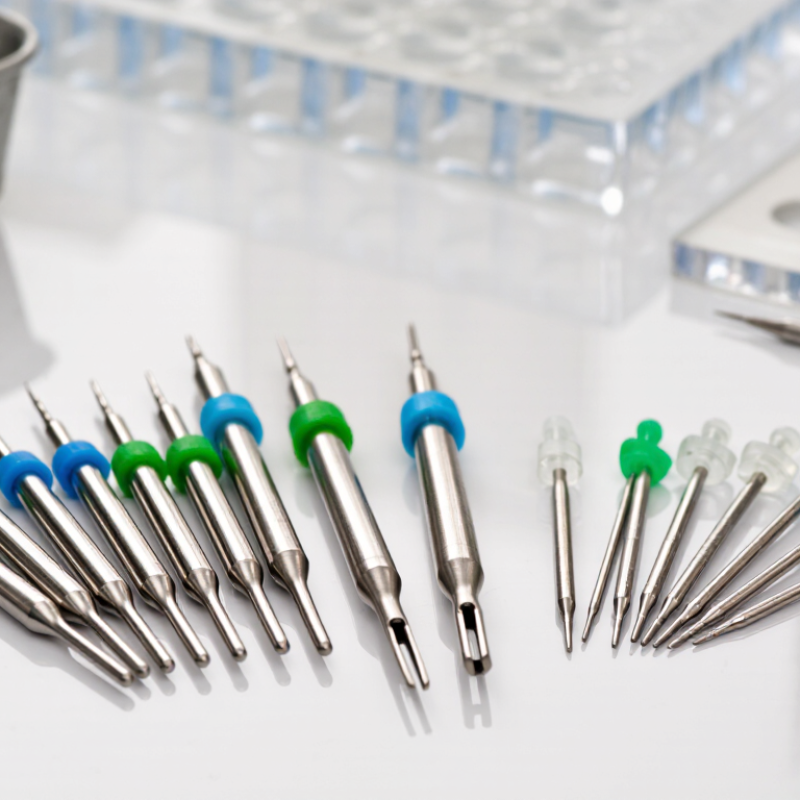
In 2026, global buyers need more than a low unit price when selecting a Reusable Needle. Product safety, cleaning requirements, and reliable supply matter equally. A suitable choice may include stainless-steel needles, blunt-tip needles, biopsy needles, or specialized laboratory designs. Each type serves a different application. Some products support repeated sterilization. Others are intended for limited professional reuse under strict instructions.

This guide compares the main Reusable Needle types available to international purchasers. It examines needle material, gauge options, tip geometry, hub construction, and sterilization compatibility. It also considers packaging, batch traceability, documentation, and supplier communication. A polished product page is not enough. Buyers should request technical files, validation data, inspection records, and clear instructions for use. Manufacturers with ISO 13485-based quality systems may offer stronger process control, but certification alone does not guarantee suitability.

Small details can change the decision. A rough hub can slow cleaning. A delicate tip can bend during handling. An unclear reprocessing cycle can create serious uncertainty. Not every “reusable” label means unlimited reuse. That assumption needs questioning. Local medical-device rules, hospital policies, and professional guidance must control the final purchase. In practice, successful buyers test samples before placing large orders. They measure durability, cleaning access, and performance after repeated cycles. The best selection balances clinical purpose, verified quality, total ownership cost, and dependable after-sales support. Mistakes still happen. Careful review reduces them.
2026 Top Reusable Needle Types for Global Buyers?

Global Demand Context: WHO Estimates 16 Billion Injections Annually

2026 Top Reusable Needle Types for Global Buyers

WHO estimates that around 16 billion injections are given worldwide each year. This figure shows the scale of global demand, but it also exposes a serious safety question. The term reusable is not automatically a virtue. Approved reusable needle systems may include autoclavable stainless-steel needles and specialized devices for dental, laboratory, or veterinary settings. Their value depends on validated sterilization, durable construction, and controlled handling. In routine human injections, single-use sterile needles often remain the safer choice.

Global buyers should examine more than needle size. Check the metal grade, hub design, connector fit, packaging, and sterilization records. A blunt tip, damaged hub, or unclear instruction can create problems quickly. Procurement teams should request independent quality documents and confirm local regulatory requirements. Product descriptions can sound impressive. They may still omit important details. That is where careful review matters.

Tips: Define the intended procedure before comparing types. Ask whether the needle is genuinely designed for repeated sterilization. Confirm cleaning and sterilization compatibility with the facility’s equipment. Keep traceability records for every cycle. Do not assume a lower purchase price means lower total cost. Waste, training, inspection, and replacement also matter. Some buyers may prefer reusable systems for specific controlled environments, but that decision deserves regular review.

2026 Top Reusable Needle Types for Global Buyers? - Global Demand Context: WHO Estimates 16 Billion Injections Annually

A procurement-oriented comparison of reusable or reprocessable needle categories. Reuse is permitted only when the specific product is designed for it and the manufacturer’s validated instructions for use allow reprocessing.

Needle Type Typical Gauge Range Typical Length Range Common Clinical or Laboratory Use Reusable / Reprocessable Position Typical Sterilization Route Key Global-Buyer Evaluation Points
Reusable hypodermic needle with detachable hub 18–27 G 13–40 mm Specialized injection or aspiration systems where a detachable needle is specifically designed for repeated processing. IFU-dependent Validated steam sterilization when compatible; other methods only when specified by the manufacturer. Needle-hub integrity, lumen cleaning, corrosion resistance, validated cycle limits, and strict separation of clean and used devices.
Reusable dental injection needle 27–30 G 10–38 mm Dental local-anesthetic delivery in systems specifically designed for reusable components. Limited and system-specific Steam sterilization may be used only when the complete device and packaging instructions support it. Penetration performance, hub compatibility, tissue-contact safety, traceability, and prevention of cross-patient transmission.
Reusable biopsy needle 14–22 G 100–250 mm Selected tissue-sampling procedures using reusable biopsy instruments or needle assemblies. Specialized use Validated steam sterilization or another validated method compatible with the instrument design. Cutting-edge durability, sample quality, cleaning access, moving-part inspection, and documented reprocessing validation.
Reusable bone-marrow aspiration needle 11–16 G 25–100 mm Bone-marrow aspiration and selected hematology procedures. Specialized use Validated steam sterilization is commonly considered for compatible all-metal instruments. Mandrel fit, bevel sharpness, clog resistance, handle strength, inspection requirements, and cycle durability.
Reusable spinal or regional-anesthesia needle 18–25 G 80–150 mm Selected spinal, epidural, or regional-anesthesia systems designed for institutional reprocessing. Limited and system-specific Only a validated method listed in the product instructions; steam compatibility depends on materials and construction. Tip geometry, stylet matching, insulation where applicable, packaging, sterility assurance, and single-patient-use restrictions.
Reusable irrigation or aspiration cannula 10–25 G 25–150 mm Fluid irrigation, aspiration, ophthalmic procedures, and selected surgical applications. Specialized use Validated steam sterilization or a compatible low-temperature method for heat-sensitive assemblies. Internal-lumen diameter, blockage risk, cleaning-brush compatibility, flow rate, material compatibility, and leak testing.
Reusable veterinary injection needle 16–25 G 13–75 mm Veterinary injections and fluid administration where local policy and the device instructions permit reprocessing. Policy- and IFU-dependent Validated steam sterilization for compatible metal devices; cleaning must occur promptly after use. Animal-species requirements, repeated puncture durability, bluntness monitoring, corrosion resistance, and operator safety.
Reusable acupuncture needle 26–40 G 13–100 mm Acupuncture procedures using reusable needle systems where national regulations permit them. Regulation-dependent Validated sterilization process appropriate to the needle material and local clinical requirements. Surface finish, shaft flexibility, tip integrity, sterilization packaging, batch traceability, and local single-use rules.
Global demand context: The World Health Organization has estimated that approximately 16 billion injections are administered worldwide each year, with the majority used for therapeutic purposes. This volume creates demand for safe injection equipment, but it does not imply that conventional injection needles should be reused.

Procurement and safety note: Many conventional hypodermic, dental, insulin, pen, vaccination, and blood-collection needles are manufactured and regulated as single-use devices. Buyers should prioritize products with documented reprocessing validation, applicable regulatory clearance, sterilization instructions, traceability, and a clearly defined maximum number of processing cycles.

2026 Type Map: Hypodermic, Dental, Biopsy, Acupuncture, and Veterinary Needles

Reusable needle purchasing in 2026 starts with clinical purpose, not catalog appearance.

Hypodermic needles need consistent bevel geometry, secure hubs, and documented material compatibility. Gauge and length should match the procedure, patient group, and delivery depth. A smooth surface helps, but it cannot replace validated cleaning.

Dental needles require controlled deflection and reliable penetration in confined spaces.

Biopsy needles need stiffness, sharp edges, and dependable sample capture.

Acupuncture needles are finer, so tip quality and surface finish deserve close inspection.

Veterinary needles may require longer shafts, stronger hubs, and designs suited to varied animal sizes.

Each type creates different handling and sterilization demands.

For global buyers, request drawings, material certificates, reprocessing instructions, and lot traceability.

Confirm cleaning validation, sterilization compatibility, corrosion resistance, and repeated-use testing.

Local regulations still control final acceptance. Do not assume stainless steel means reusable. That assumption causes trouble.

Single-use needles must never be reprocessed unless authorities explicitly permit it.

A specification can look complete and still miss practical details, such as damaged hubs, dull tips, or unclear inspection limits.

Buyers should test representative samples under real workflow conditions. Perfect documents are not enough.

The uncomfortable question is whether staff can reprocess every needle consistently, every time.

Material and Gauge Standards: ISO 9626 for Stainless-Steel Needle Tubes

For global buyers comparing reusable needle types in 2026, stainless-steel needle tubes deserve close technical review. ISO 9626 defines requirements for tubing used to manufacture medical needles. It covers dimensions, wall thickness, tolerances, and mechanical performance. Gauge labels help communication, but they are not always identical across markets. Check the actual outside diameter and bore.

Material selection affects handling and service life. Austenitic stainless steel is commonly assessed for corrosion resistance, forming quality, and compatibility with validated sterilization processes. A reusable surgical, dental, or sampling needle needs consistent tube geometry. Uneven walls can change flexibility and tip preparation. Small defects may become visible after repeated cleaning cycles.

Do not rely on a certificate alone. Request the ISO 9626 edition, dimensional inspection data, heat or lot traceability, and surface-finish information. Confirm whether the supplier tested straightness, burr control, and mechanical strength. Practical experience shows that a perfect gauge match can still fail assembly checks. That is easy to overlook.

Needle design also matters. A thin-wall tube may improve flow, yet it can reduce stiffness. A thicker wall may support durability, but it can limit internal passage. Buyers should compare intended use, cleaning validation, sterilization exposure, and expected reuse cycles. ISO 9626 supports tube quality, not complete device performance. This distinction deserves more attention.

Reprocessing Requirements: CDC Classifies Critical Devices for Sterilization

For 2026 global buyers, “reusable needle” must mean a device specifically designed for validated reprocessing. A single-use needle cannot become reusable through cleaning. Under the CDC’s Spaulding framework, instruments entering sterile tissue or the vascular system are critical devices. They require sterilization after thorough cleaning, according to the CDC Guideline for Disinfection and Sterilization in Healthcare Facilities, updated in 2019.

The details are practical. A needle with a narrow lumen can retain blood, tissue, or detergent residue. Staff need compatible brushes, flushing steps, drying controls, sterilization indicators, and documented cycle records. The device manufacturer’s instructions remain essential, including maximum reuse cycles and material limits. ISO 17664 also expects manufacturers to provide validated processing information. That distinction matters.

The WHO Global Report on Infection Prevention and Control, published in 2022, estimated that seven out of 100 acute-care patients in high-income countries acquire at least one healthcare-associated infection. Reprocessing errors are not the only cause, but weak controls increase avoidable risk. In a busy room, a clean-looking needle may still hide contamination. This is where purchasing decisions often become too optimistic.

Buyers should request validation evidence, lumen-specific cleaning instructions, sterilizer compatibility, and traceability requirements. They should also check local regulations before approval. The uncomfortable point is simple: a lower purchase price can create higher labor, inspection, and failure costs. A reusable design is useful only when the entire reprocessing system works.

Buyer Comparison Matrix: Tip, Gauge, Hub, Reuse Cycles, Cost, and Compliance

2026 Top Reusable Needle Types for Global Buyers?

A practical comparison matrix should start with the tip. A bevelled tip supports controlled penetration, while a blunt tip suits transfer work. Gauge changes flow, tissue resistance, and handling comfort. Smaller numbers mean wider bores. Common options include 18G, 21G, and 25G, but the correct choice depends on the validated procedure.

The hub needs equal attention. Luer-compatible hubs simplify equipment matching, while locking hubs reduce accidental separation. Reuse cycles should never be estimated from appearance. Many hypodermic needles are labeled single-use under ISO 7864:2020. For genuinely reusable designs, buyers should request validated cleaning limits, sterilization parameters, and documented cycle testing. FDA reprocessing guidance stresses validation, traceability, and performance checks after repeated processing.

Cost per purchase can mislead. Calculate cost per safe cycle, including labor, inspection, sterilization, rejected units, and waste. WHO materials estimate roughly 16 billion injections occur worldwide each year, making injection safety a major procurement concern. Compliance evidence should include ISO certificates, material specifications, biocompatibility records, and country-specific registration. A low price is not a saving if the hub loosens after ten cycles. That assumption needs testing. Independent lot sampling and simulated-use trials often reveal weaknesses that catalog tables hide.

2026 Top Reusable Needle Types for Global Buyers

Buyer comparison matrix: tip, gauge, hub, validated reuse cycles, relative cost, and compliance readiness.

Needle family Tip design Common gauge range Typical hub Reuse-cycle reference Relative cost index Key compliance focus
Veress access needle Beveled outer cannula with spring-loaded blunt stylet 12–15G Luer-lock or integrated valve 20–50 cycles when validated 4/5 Mechanical function, cleaning validation, sterilization and traceability
Aspiration needle Lancet or bevel tip 18–22G Luer-lock hub 20–50 cycles when validated 3/5 Tip sharpness, lumen patency, bioburden control and sterile processing
Biopsy needle Tri-beveled cutting tip or side-notch sampling tip 14–18G Threaded or proprietary reusable handle 10–30 cycles when validated 5/5 Cutting performance, tissue carryover, disassembly and validated reprocessing
Non-coring access needle Curved non-coring bevel 19–22G Luer-lock hub 20–50 cycles when validated 3/5 Septum protection, tip integrity, cleaning and sterilization compatibility

The chart uses a relative procurement index rather than a currency price: 1 indicates lower acquisition cost and 5 indicates higher cost. Compliance readiness reflects the relative documentation and reprocessing complexity typically associated with each needle family. Reuse-cycle figures are representative validation ranges, not universal guarantees; buyers should confirm the device-specific instructions for use, ISO 17664 processing information, sterilization method, local medical-device requirements, and documented end-of-life criteria before purchase.