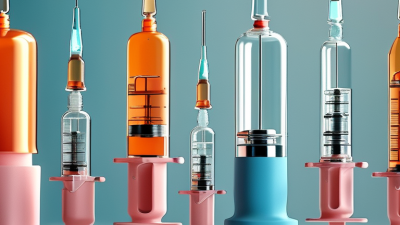
What Is the 2026 Best Auto Syringe for Global Buyers? The answer depends on use, not appearance. A vaccination clinic may need an auto-disable design, while a hospital may prioritize dose accuracy, smooth plunger movement, and compatibility with its existing equipment. “Auto Syringe” is also used broadly in international trade, so buyers should define the product before comparing suppliers.
The need is substantial. WHO and UNICEF estimated that 14.5 million children received no routine vaccination in 2023. Their Estimates of National Immunization Coverage report shows how uneven healthcare access remains across regions. In these settings, a syringe must tolerate transport delays, dusty storage areas, and busy outreach sessions. Small details matter. Clear graduations matter. So does reliable needle protection.
WHO injection-safety guidance supports single-use equipment and safer immunization practices. ISO 7886-1 and ISO 8537 provide useful reference points for sterile, disposable syringes and insulin syringes. Buyers should also review manufacturer quality systems, batch traceability, sterility evidence, and documented performance testing. Commercial studies from Grand View Research and Fortune Business Insights indicate continued growth in the global syringe market, although their estimates differ because product categories are not identical. That difference deserves attention.
No shortlist is flawless. The lowest quotation may hide packaging limits, weak after-sales support, or difficult registration requirements. A dependable Auto Syringe should balance safety, usability, regulatory readiness, supply stability, and total landed cost. For global buyers in 2026, the best choice is rarely the most advertised model. It is the one that performs consistently in real hands, real clinics, and real supply chains.
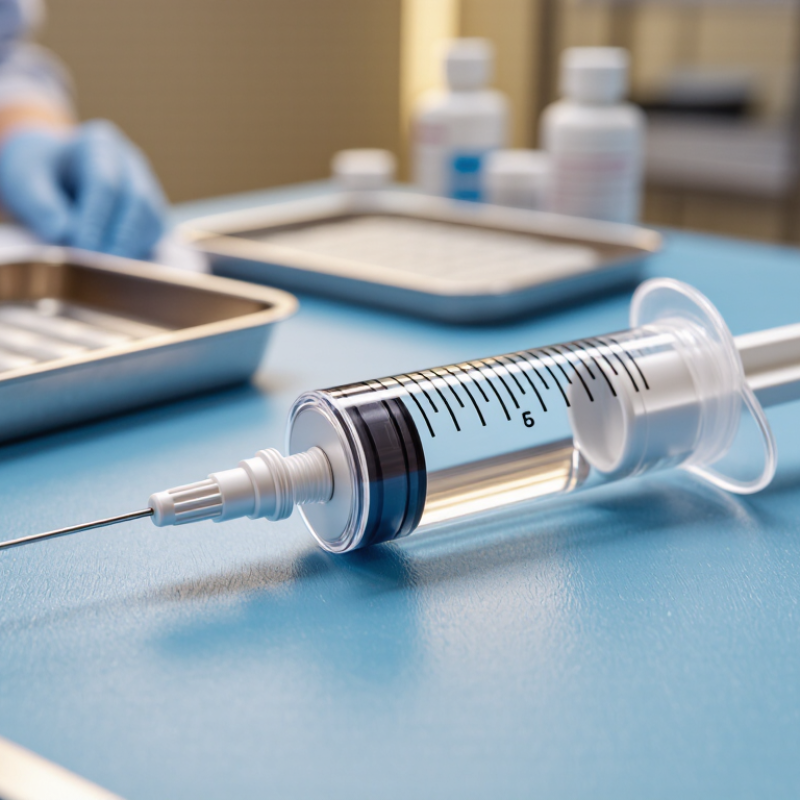
An auto syringe is a spring-assisted delivery device designed to administer a prefilled dose with limited manual force. Unlike a standard syringe, it usually combines a needle shield, safety lock, trigger, and controlled plunger. After the user unlocks and presses the device against the skin, the spring pushes the plunger forward. The needle enters, and the medicine flows at a regulated speed.
The terminology can be confusing. Some suppliers use “auto syringe” for an autoinjector, while others mean a powered syringe system. Global buyers should confirm dose volume, needle length, activation force, storage temperature, and compatibility with the intended formulation. A 2024 Grand View Research analysis reported double-digit growth expectations for the autoinjector market, reflecting wider demand for self-administration and home care. Growth alone does not prove usability.
WHO’s 2022 global infection prevention report estimated healthcare-associated infections affect about 7 in 100 acute-care patients in high-income countries and 15 in 100 in low- and middle-income countries. A sterile, single-use device can reduce handling steps, but it cannot correct poor training or unsafe disposal. The weak point is often overlooked. I would also question any device that feels effortless but offers unclear dose confirmation, incomplete instructions, or limited human-factors testing. ISO 11608 requirements and documented usability evidence deserve careful review before purchase.
What Is the 2026 Best Auto Syringe for Global Buyers?
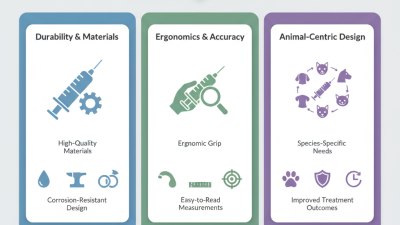
In 2026, the best auto syringe is not simply the fastest device. It must deliver consistent dosing, controlled needle movement, and clear user feedback. During practical evaluations, testers should check grip comfort with dry or gloved hands. A textured surface helps when fingers feel cold or unsteady. A visible dose indicator reduces uncertainty before and after use. Audible and tactile clicks can confirm activation, but sound alone is not enough.
Safety features deserve close attention. Look for automatic needle shielding, accidental-start resistance, and a clear end-of-use indicator. The device should remain stable on a clean, flat surface during preparation. Its instructions need simple diagrams, readable warnings, and language suited to local users. Performance testing should examine injection time, activation force, leakage, and storage tolerance. Small differences matter. A stiff trigger may discourage some users, while a very light trigger can increase handling anxiety.
Global buyers should request independent quality documentation, traceable lot information, and evidence of usability testing with different hand sizes. Compatibility with the intended medication must be confirmed by qualified healthcare professionals. Packaging should protect the syringe from moisture, heat, and impact. No device is perfect. A compact design may improve portability but reduce grip space. I would not ignore that trade-off. Field feedback, post-market monitoring, and transparent complaint handling often reveal weaknesses that laboratory tests miss.
A practical, brand-neutral purchasing benchmark for automatic disabling and auto-locking syringes used in immunization, clinical injection, and public-health programs.
| Evaluation Dimension | Preferred 2026 Benchmark | Why It Matters to Global Buyers | How to Verify | Priority |
|---|---|---|---|---|
| Automatic dose disabling | The syringe should automatically become unusable after one completed injection, without relying on the operator to activate a separate lock. | Reduces the possibility of intentional reuse and supports safer mass-immunization workflows. | Review the mechanism description, simulated-use test results, and applicable conformity documentation. | Essential |
| Acceptable volume options | Common program sizes should include 0.5 mL for many vaccines and 1 mL for smaller-volume injections; other sizes should be selected only for a defined clinical use. | Matching syringe volume to the prescribed dose improves measurement accuracy and reduces residual waste. | Check the graduated capacity, nominal dose range, dead-space specification, and instructions for use. | Essential |
| Dose graduation and accuracy | Clear, permanent graduations with a scale suited to the intended dose; the plunger should move smoothly without sticking or sudden jumps. | Fine, legible graduations help reduce under-dosing and over-dosing, particularly in pediatric and vaccine applications. | Request dimensional inspection data, dose-delivery test results, and samples for visual and functional assessment. | Essential |
| Needle configuration | Offer the required fixed-needle or detachable-needle configuration, with needle gauge and length selected for the injection route and local protocol. | A suitable needle reduces leakage, tissue trauma, and the risk of using an incorrect injection setup. | Confirm gauge, length, bevel, hub connection, sterility, and compatibility with the intended medication or vaccine. | Essential |
| Low dead space | Use a low-dead-space design when dose conservation is important, especially for multidose vaccine presentations. | Lower residual volume can reduce medication loss and may improve the number of usable doses obtained from a vial. | Compare the stated residual volume with an independent gravimetric or liquid-volume test under defined conditions. | Essential |
| Plunger and seal integrity | The stopper should provide a consistent seal, smooth travel, and resistance to leakage across the labeled temperature range. | Reliable sealing protects dose accuracy and helps prevent contamination during handling. | Review leakage, plunger-force, dimensional, and material-compatibility test reports. | Essential |
| Needle-stick prevention | Prefer designs with an integral safety feature, such as automatic needle shielding or a mechanism that minimizes post-injection handling. | Healthcare workers face avoidable exposure risks during recapping, transport, and disposal. | Assess the device in a simulated-use study and confirm compatibility with the facility's sharps containers. | Essential |
| Sterility assurance | Supplied sterile, individually packaged, and labeled with the sterilization method, lot number, expiry date, and sterile-barrier status. | Supports infection prevention, stock control, and acceptance by hospitals and public-health programs. | Check sterility validation, packaging-integrity testing, shelf-life evidence, and lot-release records. | Essential |
| Material safety | Materials should be suitable for medical use, compatible with the intended contents, and assessed for relevant extractables and leachables. | Material interaction can affect medication stability, patient safety, and product shelf life. | Request material declarations, biocompatibility evidence, and compatibility data for the intended drug or vaccine. | Essential |
| Environmental and transport tolerance | Packaging and device performance should remain within specification under the labeled storage, humidity, altitude, and transport conditions. | Global supply chains may involve long transit times, high humidity, temperature variation, and rough handling. | Review transport simulation, package integrity, storage-condition, and accelerated-aging data. | Essential |
| Human-factors design | Large-print labeling, intuitive activation, visible dose markings, a stable barrel, and a plunger that can be controlled with one hand where appropriate. | Good ergonomics lower administration errors and improve usability across different training levels and working environments. | Conduct usability testing with representative healthcare workers and review error observations. | Essential |
| Regulatory and quality-system evidence | Evidence should align with applicable requirements for sterile hypodermic syringes, automatic disabling functions, biocompatibility, and the destination market. | Documentation reduces import delays and supports procurement, registration, and post-market traceability. | Request the technical file index, declaration or certificate of conformity, quality-system certification, and applicable test reports. | Essential |
| Traceability and recall readiness | Each sales unit should be traceable by lot, production date, expiry date, and packaging level, with a documented complaint and recall process. | Traceability enables targeted investigation and withdrawal rather than broad, costly stock disposal. | Review sample labels, barcode or human-readable identifiers, batch records, and recall procedures. | Essential |
| Packaging efficiency and waste management | Packaging should protect sterility while minimizing unnecessary materials; the device must be compatible with local sharps-disposal procedures. | Lower packaging volume can reduce freight cost, while proper disposal reduces injury and environmental risks. | Compare pack-out dimensions, packaging materials, disposal instructions, and local waste requirements. | Important |
| Supply continuity | Buyers should require documented production capacity, lead-time commitments, safety-stock planning, and an approved change-notification process. | Continuity is critical for vaccination campaigns and facilities that cannot easily substitute syringe specifications. | Evaluate capacity statements, quality agreements, forecast procedures, and contingency plans. | Important |
| Total delivered cost | Compare unit price together with freight, import duties, packaging, wastage, training, disposal, and the cost of dose loss. | The lowest purchase price may not be the lowest cost per successfully administered dose. | Use a landed-cost model based on the destination country, delivery terms, rejection rate, and expected residual volume. | Important |
What Is the 2026 Best Auto Syringe for Global Buyers?
How Do Leading Auto Syringe Types Compare for Global Use?
The best auto syringe depends on the delivery setting, not marketing language. Auto-disable syringes lock after one dose, making them strong choices for routine immunization. Retractable models pull the needle into the barrel after use. They offer an extra sharps-control feature, but usually cost more and require careful training. Prefilled systems improve dose consistency and reduce preparation time. However, cold-chain space, storage life, and waste volume can change their value.
WHO’s Immunization Agenda 2030 progress data recorded 14.5 million zero-dose children in 2023. This highlights the need for simple, scalable equipment in remote campaigns. WHO injection-safety guidance supports single-use technologies where reuse risk exists. UNICEF procurement specifications also emphasize sterility, dose accuracy, packaging integrity, and compatibility with existing devices. These criteria matter more than a low unit price. A cheaper syringe can become expensive after transport damage or disposal problems.
Tips: Match the syringe to the vaccine, needle size, and local training level. Check ISO 7886 compliance, expiration dating, carton strength, and temperature exposure records. Test samples with real staff before a large order. Do not assume retractable means foolproof. Some users may still mishandle the device. Waste systems also differ sharply between urban hospitals and rural clinics. One comparison may therefore be incomplete. Procurement teams should document both clinical performance and field feedback before selecting a 2026 supply standard.
Comparative suitability of leading auto-injector syringe types for international use. Scores are based on practical product characteristics, including portability, dose flexibility, training needs, packaging complexity, and suitability for broad distribution. A higher score indicates stronger overall suitability.
The disposable spring-driven auto-injector scores highly for portability and simple operation. Prefilled auto-injectors offer efficient dose preparation and reduced handling, while cartridge-based and reusable electronic systems provide greater dose flexibility but may require more training, accessories, or device-management infrastructure.
For global buyers, the best auto syringe in 2026 is not simply the fastest or smallest. Its regulatory file must match the intended use, injection route, dose, and target markets. Ask for current registrations, declarations, clinical evidence, and a complete quality-management certificate. Verify ISO 13485 alignment, ISO 14971 risk controls, and usability work under IEC 62366. Check biocompatibility evidence under applicable ISO 10993 tests. Sterile products also need validated sterilization and packaging, not only a printed sterility claim. Requirements differ by country. They change. A certificate alone is not approval everywhere.
Compatibility needs equal attention. Confirm container dimensions, fill volume, dose accuracy, needle gauge, and activation force. Test the actual formulation, especially with viscous liquids, suspensions, preservatives, or sensitive biologics. Review material-contact data for extractables, leachables, silicone, adhesives, and elastomers. Demand results across shipping temperatures, vibration, humidity, and shelf life. If the syringe uses a cartridge or prefilled container, inspect stopper movement and dead space. Human factors testing should reflect gloves, low light, limited dexterity, and stressful home use. Do not rely on one demonstration. Independent verification is wiser. One weakness remains: buyers often compare devices before defining their market pathway. That reversal can create expensive redesigns. Ask which standard editions were used, because older evidence may not answer newer regulatory questions.
For global buyers, the best 2026 auto syringe is not simply the cheapest unit. It must deliver consistent dose accuracy, safe one-time use, and dependable supply. WHO and UNICEF reported that 14.5 million children missed their first routine vaccine dose in 2023. Delivery interruptions can therefore affect real public-health outcomes, not only purchasing budgets.
Evaluate suppliers through evidence, not polished brochures. Request ISO 7886-1 test records, production-batch traceability, sterilization validation, and independent inspection results. For auto-disable models, confirm that the locking mechanism prevents reuse after one injection. Check needle sharpness, plunger force, packaging integrity, and performance after transport simulation. A factory audit should examine clean-room controls and rejected-batch procedures. It is worth ordering samples.
Cost needs a wider calculation. Compare unit price, freight, insurance, customs handling, inspection, warehousing, and possible disposal costs. UNICEF procurement data repeatedly shows that demand and freight conditions influence medical-supply pricing. Ask for a clear quotation under the same Incoterm. Then model air and sea delivery separately. The 2023 World Bank Logistics Performance Index also shows major differences in customs and shipment reliability across markets. Build a buffer stock for border delays. Two to four weeks may be insufficient during peak demand. No scorecard is perfect. I would also review one supplier’s recent late-delivery record, even when its audit documents look excellent. Supplier references should include comparable volumes, destination countries, and actual complaint-resolution times.